Аbout us
By the agreement on the 2nd of December, 1920 in Yerevan, Armenia was proclaimed a Soviet Socialist Republic. The entire power passes to the Revolutionary Committee of Armenia (Revkom) led by Sargis Kasyan. On the same day, Isahak Dovlatyan is appointed by as a Democratic Commissar for Internal Affairs (DCIA) by the decree of Revkom. The new authorities are taking priority steps to provide the police with the personnel. Training courses for law enforcement officers are organized. The courses or police schools have functioned at different times, but they did not have a systematic, durable nature and did not act as educational institutions delivering long-term educational programs.
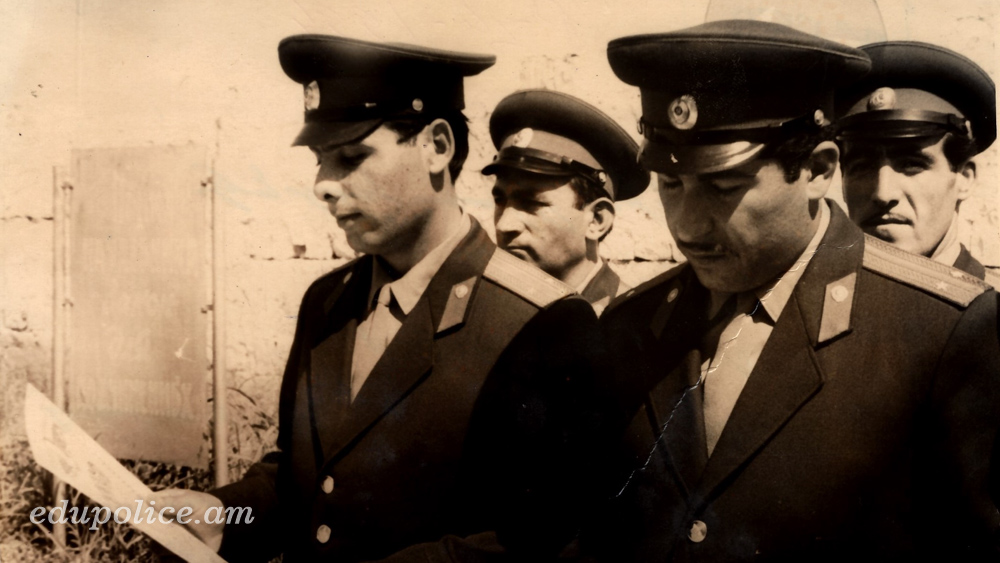
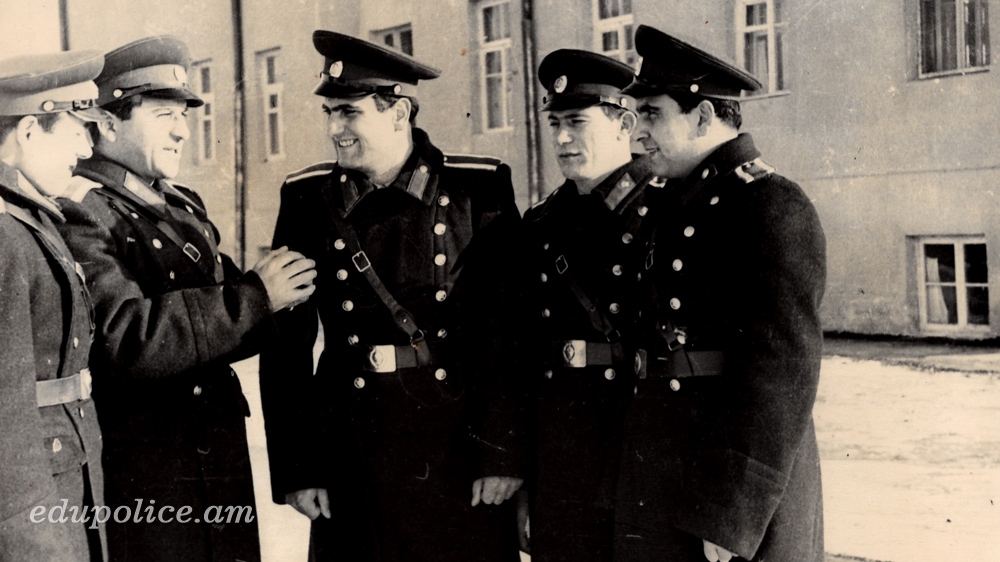
Armenian police did not have an education institution for developing professionals. The workers of the judicial system were sent to study in different educational institutions of the USSR, which led to additional financial costs. However, in the future, the USSR authorities established secondary professional police schools in the union’s republics where the junior and middle-level commanding staff would be trained. On the 16th of June, 1966 by the decree of the Supreme Council of ASSR presidency then by the decree of the Government, the vocational police school of Yerevan was established where the study was two years and the title of Junior Lieutenant was awarded.
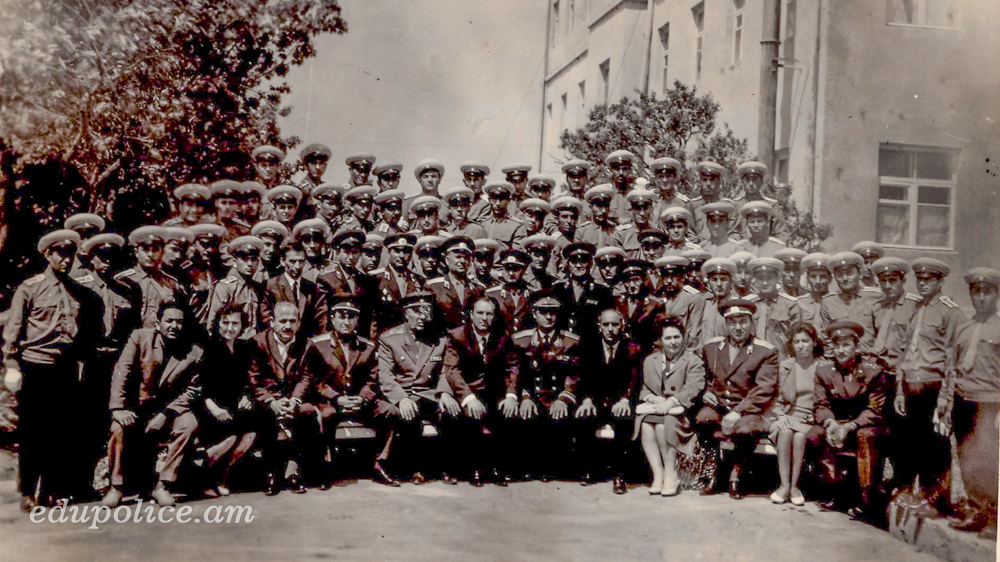
Until 1990-1991 the vocational police school of Yerevan operated in the status of higher education of USSR Ministry of Internal Affairs, and in 1991-1995 as a Higher School of the Ministry of Internal Affairs of the RA.
The Higher School of the Ministry of Internal Affairs of the Republic of Armenia is established by Decision[1] N 197 of the Prime Minister of the Republic of Armenia on September 26, 1995, "On Higher School of the Ministry of Internal Affairs of the Republic of Armenia." Then, two years later, the Higher School of the Ministry of Internal Affairs and National Security of the Republic of Armenia was established by the Decision 311-N of the Government of the Republic of Armenia on July 30, 1997, "On Approving the Charter of the Higher School of the Ministry of Internal Affairs and National Security of the Republic of Armenia." By the above decision, it was defined that the Higher School of the Ministry of the Internal Affairs and National Security of the Republic of Armenia is a state higher military educational institution. The main objectives of the school were:
1) development of professionals of commanding staff with judicial and engineering education;
2) improving qualification and retraining of the middle and senior commanding staff of the internal affairs system;
3) development of scientific and pedagogical staff;
4) Scientific development of issues related to the activities of internal affairs and national security bodies, conducting research in the field of law.
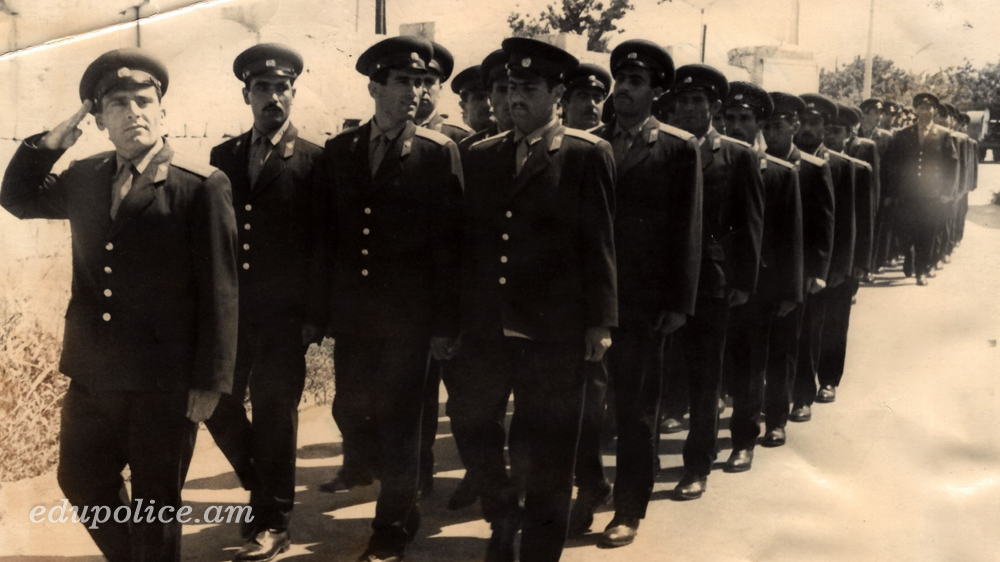
The school was renamed into a Higher School of the Ministry of Internal Affairs of the Republic of Armenia by the decision of the Government of the Republic of Armenia No 566 on September 14, 1999 "On Making Amendments to the Government decision No. 311 decision on July 30, 1997". It should be noted that, in this case, the previous charter was almost completely preserved, and the objectives and functions remained unchanged. The next amendment was made by the RA Government decision 485-N on August 16, 2000, by which the Higher School of the Ministry of Internal Affairs of the Republic of Armenia was renamed to the Academy of the Ministry of Internal Affairs of the Republic of Armenia. The most important achievement was the decision of the RA Government No 1184-N on August 28, 2003 “on approving the Code of Conduct of Education in the Police Educational Institution”.
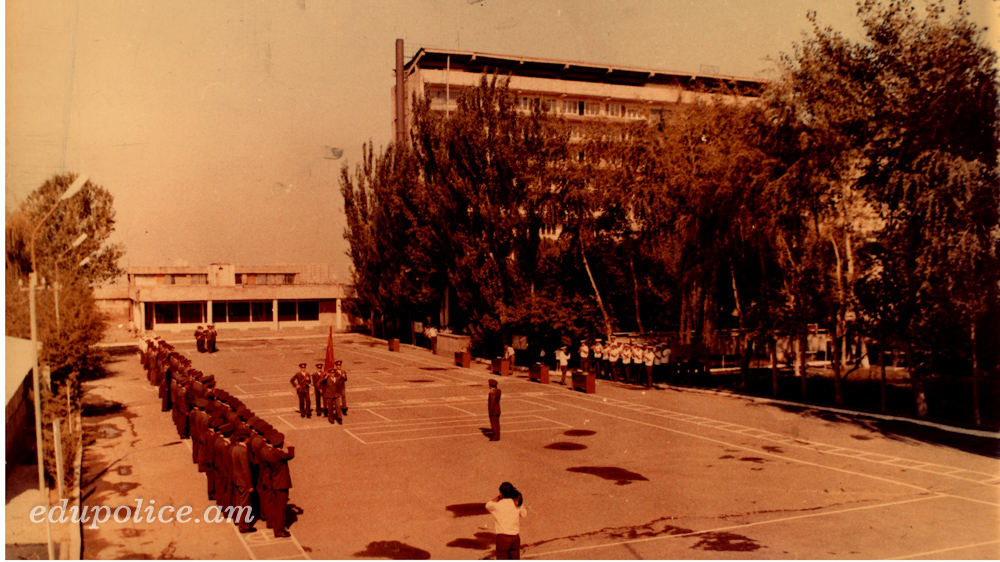
By the RA Government Decree 615-N on April 28, 2011, the RA Police Academy State Non-Commercial Organization was reorganized to "The Educational Complex of the Police of the RA" State Non-Commercial Organization.
The Educational Complex of the Police has implemented initial (vocational), secondary vocational, higher, postgraduate professional, and additional educational programs.
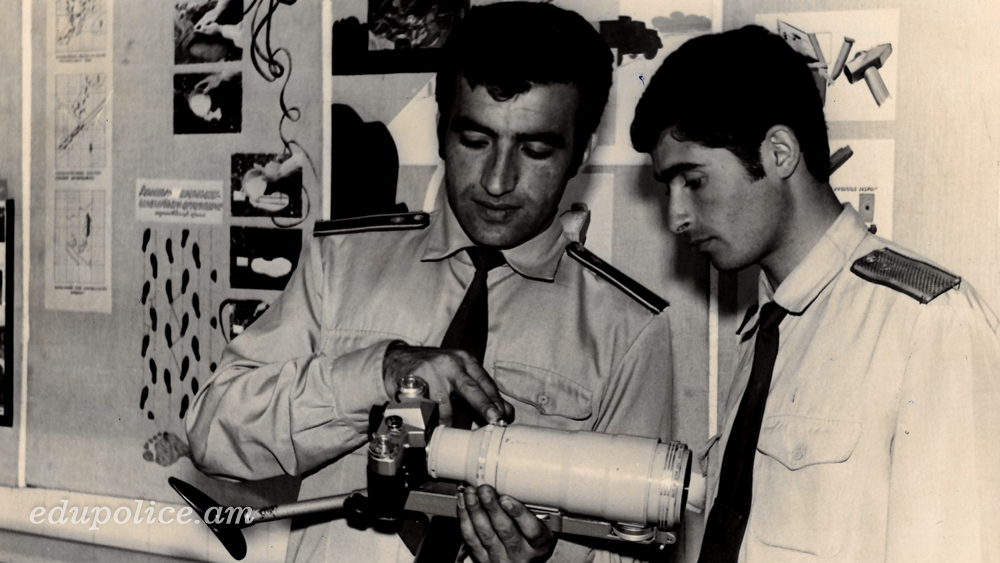
By Decision No. 1989-N of the Government of the Republic of Armenia dated December 12, 2024, the “Educational Complex of the Ministry of Internal Affairs of the Republic of Armenia” State Non-Commercial Organization (date and registration number: 15.09.2009, No. 290.210.03884) and the “Crisis Management State Academy” State Non-Commercial Organization (date and registration number: 14.07.2003, No. 286.210.05045) were reorganized through merger, resulting in the establishment of the “Educational Complex of the Ministry of Internal Affairs of the Republic of Armenia” State Non-Commercial Organization (29 Admiral Isakov Avenue, Yerevan). The Government of the Republic of Armenia Decisions No. 1791-N of November 9, 2006, and No. 1055-N of June 29, 2005, have been declared invalid.
The scope of activities of the Educational Complex of the Ministry of Internal Affairs of the Republic of Armenia (hereinafter referred to as the Educational Complex) includes educational, scientific, expert, consulting, educational-production, and publishing activities.
The Educational Complex is a state higher education institution operating within the system of the Ministry of Internal Affairs of the Republic of Armenia, which implements vocational, secondary vocational, higher, and postgraduate professional, as well as additional educational programs․
The objectives of the Educational Complex are:
1. to train specialists in the field of public security, including those with police and rescue education;
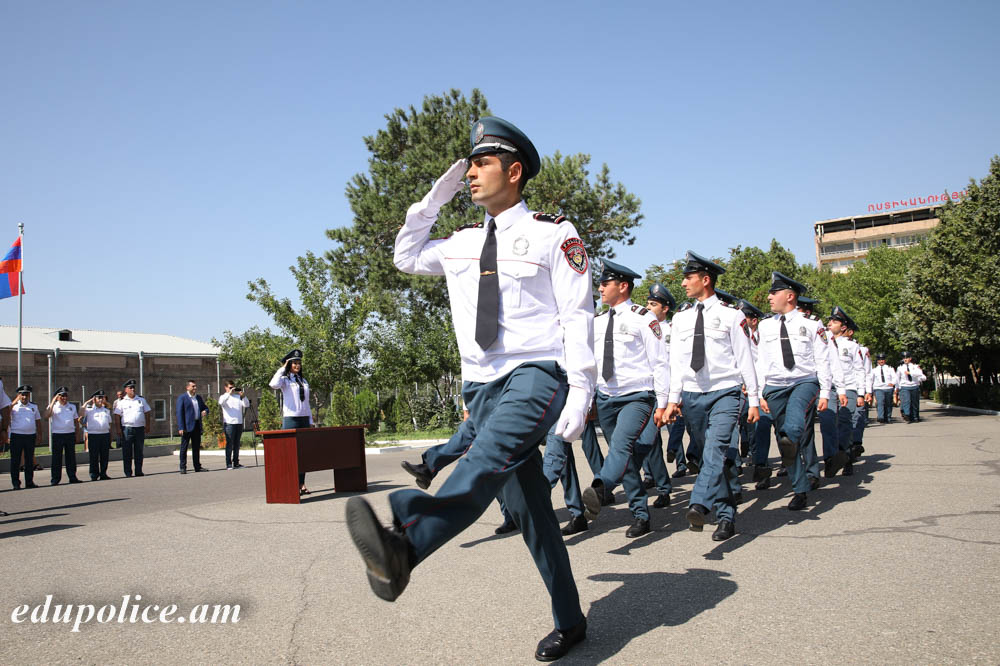
2. to provide professional training for junior, middle, senior, chief, and high-ranking officers of the Police and Rescue Service, professional development for civil servants of the Ministry, as well as retraining of individuals with higher education in relevant specialties for the needs of the Ministry;
3. to train specialists in the field of civil defense and protection of the population in emergency situations;
4. to provide training and retraining for managerial staff and specialists of state administration and local self-government bodies of the Republic of Armenia, organizations (regardless of their organizational-legal form), as well as teachers and academic staff within the educational system of the Republic of Armenia who teach in the fields of civil defense and emergency protection;
5. to train and retrain scientific and pedagogical personnel;
6. to train and retrain specialists with legal education;
7. to disseminate knowledge among the population, including on resilience to emergency situations, to organize and implement public education on civil defense issues, and to enhance the educational and cultural level of the population;
8. to analyze law enforcement practices and administration in the areas of Ministry governance, including police activities, civil defense, protection of the population in emergency situations, and migration; to conduct scientific research on existing issues and carry out studies in the field of jurisprudence;
9. to develop and publish educational and methodological materials and to promote the dissemination of knowledge;
10. to ensure and improve the quality of education through the introduction of appropriate systems, and to develop international cooperation and public relations within its competence;
11. to ensure continuity, transparency, and publicity of the educational process;
12. to educate students in the spirit of national, moral, and universal values, and to instill civic responsibility, skills, and a responsible attitude toward work in the context of democratic and civil society governance.
The management of the Educational Complex is carried out in accordance with the Constitution of the Republic of Armenia, the Civil Code of the Republic of Armenia, the Laws “On Service in the Police,” “On the Rescue Service,” “On the Police,” “On State Non-Commercial Organizations,” “On Education,” “On Higher and Postgraduate Professional Education,” “On Vocational Education and Training,” other laws and legal acts, as well as its Charter.
The structure of the Educational Complex includes the Police Educational Unit, the Rescue Service and Crisis Management Educational Unit (with the status of departments), with their respective departments, training centers, and chairs, as well as divisions responsible for the organization, monitoring, and continuous development of the educational process, quality assurance of education, scientific research, innovation and educational development, international cooperation and public relations, information technologies, human resource management, and other units.
The Educational Complex operates combat and laser shooting ranges, a crime scene investigation laboratory, specialized and general libraries, as well as equipped sports halls. The institution possesses the necessary infrastructure and resources and ensures an appropriate educational environment.